
More Than Recognition
Identity is not about being known.
It is not about titles, status, rank, position, or whether the world understands what you do. Real identity sits much deeper than that. It is connected to personal purpose, to the things that give us energy, value, pride and direction.
It is the quiet sense that we are giving ourselves to something that matters. Not because other people are watching, but because it means something to us.
When identity is strong, life has shape. We understand what we stand for, what we are working towards, and what standards we expect from ourselves. We have a reason to get up in the morning that goes beyond routine or survival.
That does not mean every day is perfect. It means there is something underneath the hard days that keeps us moving with intent.
When Identity Is Given to You
For more than two decades in the Royal Marines, I had an identity that was almost automatic.
Every day, I was somebody within a structure that made sense to me. I had a role, responsibility and a clear place within a team. I was relied upon by other Marines, tested in difficult environments and held to standards that shaped how I saw myself.
I was proud of what I had achieved, but more than that, I loved the life. I loved the people, the humour, the hardship, the discipline, the pressure, and the sense of belonging that came with it.
When I came home, people were often interested in where I had been and what I had done. I was never too fussed about the attention. What mattered more was that I woke up each morning with purpose.
I knew who I was.
That is a powerful thing.
But there is also a risk when identity has been so closely tied to an organisation, a uniform, a role or a position of recognition. When that chapter ends, the structure can disappear almost overnight. The uniform comes off. The daily reliance on you changes. The rhythm that carried you is no longer there.
If that gap is not understood, it can become a void.
The Void After Purpose
Losing identity does not always happen loudly. Sometimes it creeps in slowly.
A person can lose focus without noticing it at first. Standards can begin to drop. The days can become repetitive. The edge that once existed begins to soften. What used to give energy no longer exists, and nothing meaningful has replaced it.
That is when people can start accepting a version of themselves they do not really respect.
You hear it in throwaway comments all the time.
“Same shit, different day.”
“Living the dream.”
“I'm bored.”
They are often said as jokes, but sometimes there is something underneath them. Frustration. Resentment. Disconnection. A sense that life has become something to endure rather than something to take ownership of.
I have never liked the word bored.
If I am bored, I see that as my responsibility. It tells me something needs to be addressed. It may mean I am not being challenged, not being stretched, or not giving enough of myself to something with meaning.
That does not make it easy to fix, but I do believe it is ours to confront.
Because when boredom, negativity, and routine are left unchallenged, they do not stay still. They affect how we think, how we work, how we lead, how we communicate, and how we show up at home. Negativity rarely stays contained. It spreads into the spaces around us.
Your Own Target
Identity has very little to do with what other people are doing.
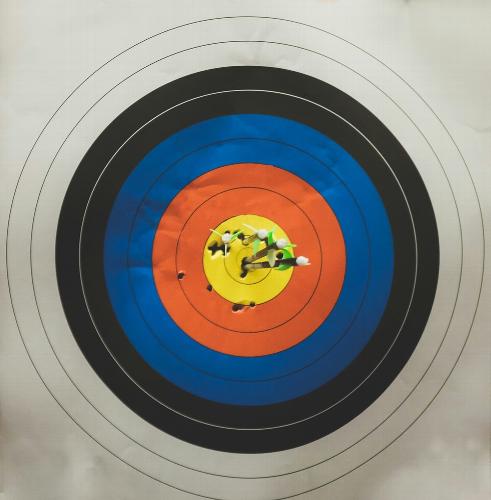
In the military, after a shoot, you do not spend your time looking across at someone else's target to see how well or badly they have done. It doesn't matter. Their target is not yours.
You study your own.
You look at where your rounds have landed. You understand the pattern. You make corrections. You adjust your position, breathing, focus and discipline. Then you go again.
That principle applies to life.
Too many people spend their energy looking across at someone else's target. Their career, progress, money, recognition, pace or apparent success. But comparison rarely builds identity. More often, it weakens it.
The real work is always on your own target.
It is about having the honesty to look at where you are, where you are missing, and what needs correcting. It is about recognising the standards you have allowed to slip and deciding whether you are prepared to do something about them.
That level of honesty is not always comfortable, but it is necessary.
Self-Awareness and Thresholds
Identity requires self-awareness.
Not the polished version we present to other people, but the honest version we live with when there is no audience. It requires us to understand our limits, but also to recognise that some thresholds are there to be pushed through.
There is a difference between knowing your limits and hiding behind them.
Some limits protect us. Others become stories we repeat because they excuse us from doing the harder thing. Over time, those stories can become part of who we think we are.
“I'm too old.”
“I've missed my chance.”
“I'm not that type of person.”
“That's just the way things are.”
The danger is that these beliefs can start to feel like facts. They can keep people stuck in cycles that slowly drain energy, confidence and purpose.
I have seen people break through those thresholds many times. In training, on operations, in sport, in business and in everyday life. The breakthrough is not always dramatic. Often, it starts with a decision to stop accepting the current pattern.
To take ownership again.
To stop waiting for motivation.
To stop allowing circumstance to have the final word.
Rebuilding Identity
When I started ETHOS, it gave me focus again.
It gave me shared purpose, shared achievement and a new path to build. It allowed me to take what had shaped me over many years and use it in a different way.
Not to recreate the Royal Marines. That chapter had gone.
But to carry the best of what it taught me into something new.
That distinction matters. Identity is not about clinging to who we were. It is about understanding what has shaped us, taking ownership of who we are now and building something we can still be proud of.
For some people, that may be found through work. For others, it may come through family, service, coaching, fitness, faith, learning, creativity, leadership, or simply becoming more present and dependable in the life they already have.
There is no single version of identity that everyone should follow.
The world does not need to know who you are for your identity to matter. But you need to know. You need to understand what gives you energy, what brings you pride, what aligns with your values and what makes you feel that you are not wasting the opportunity in front of you.
The ETHOS View
At ETHOS - Empowering Growth, we work with people and teams to reconnect with that sense of ownership.
We help individuals understand behaviour, challenge patterns, and push through thresholds that may be limiting how they think, lead, communicate or perform. Much of that work begins with self-awareness, because without it, people can stay trapped in cycles they have never properly stopped to question.
Identity is not handed to us forever. It can change, weaken, disappear and be rebuilt.
But when it is rebuilt with honesty, ownership, and courage, it can become stronger than the one we had before.
Because identity is not about being seen by everyone else.
It is about knowing who you are, what you stand for and where your next round needs to land.